
Key takeaways from the report
Private offerings made under Regulation D are exempt from SEC registration, so there is no SEC- reviewed prospectus1,2.
Operating agreement (or LP agreement): the legal contract governing the entity, distributions, voting and sponsor authority
Subscription agreement: your application to invest, including investor representations and accreditation information
What a PPM is, and what it is not
Private offerings made under Regulation D are exempt from SEC registration, so there is no SEC- reviewed prospectus1,2. Instead, sponsors provide a PPM along with the operating agreement and subscription documents. Together, these define your rights as an investor.
A PPM is not a marketing piece. It is written by attorneys to disclose risks fully. Expect it to be long, cautious and repetitive. That is by design.
The documents in a typical offering package
Private placement memorandum: the disclosure document
Operating agreement (or LP agreement): the legal contract governing the entity, distributions, voting and sponsor authority
Subscription agreement: your application to invest, including investor representations and accreditation information
Supplemental materials: investor presentations and summaries, which are helpful but do not override the legal documents
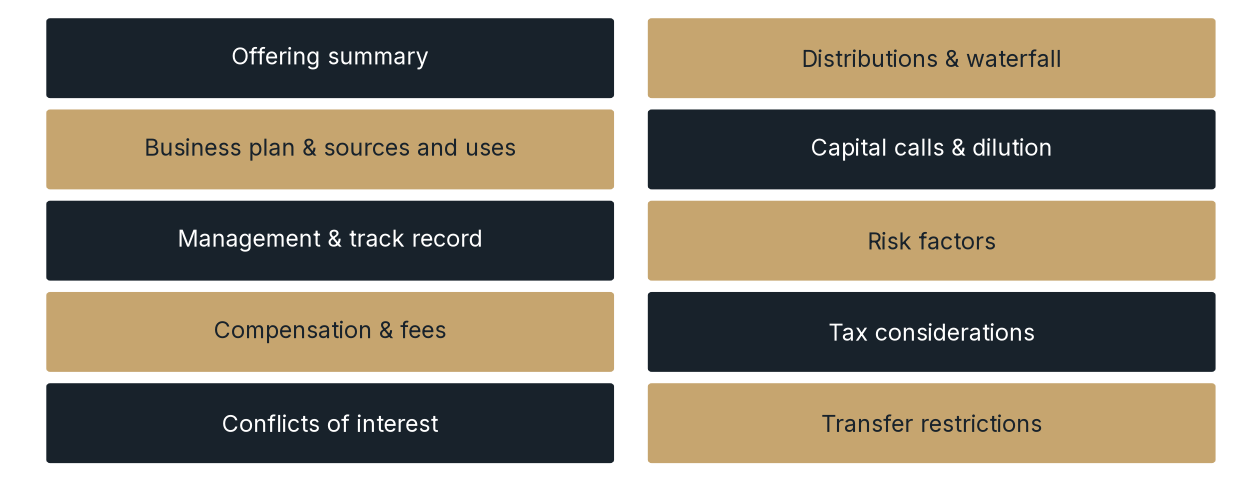
Chart Summary and Key Values
The PPM reading map groups ten topics: offering summary; business plan and sources and uses; management and track record; compensation and fees; conflicts of interest; distributions and waterfall; capital calls and dilution; risk factors; tax considerations; and transfer restrictions. It is a document-navigation diagram, not a financial projection.
The main sections of a typical private placement memorandum. Section names and order vary by offering. Graphic: Ascendant Development.
Section by section: where to focus
Summary of the offering
The term sheet: the amount being raised, the minimum investment, the class of interests offered and key dates. Confirm it matches what you were told.
The business plan and property
What will be built, where, on what schedule and with what budget. For development, look for the total project cost, sources and uses of funds, and how the interest reserve and contingency are sized.
Management and the sponsor
Biographies of the principals and the sponsor's track record. Compare it with what you learned in your diligence calls.
Compensation and fees
Every fee paid to the sponsor and its affiliates. In development, these may include development, construction management, asset management and property management fees. Understand what each fee pays for and when it is earned.
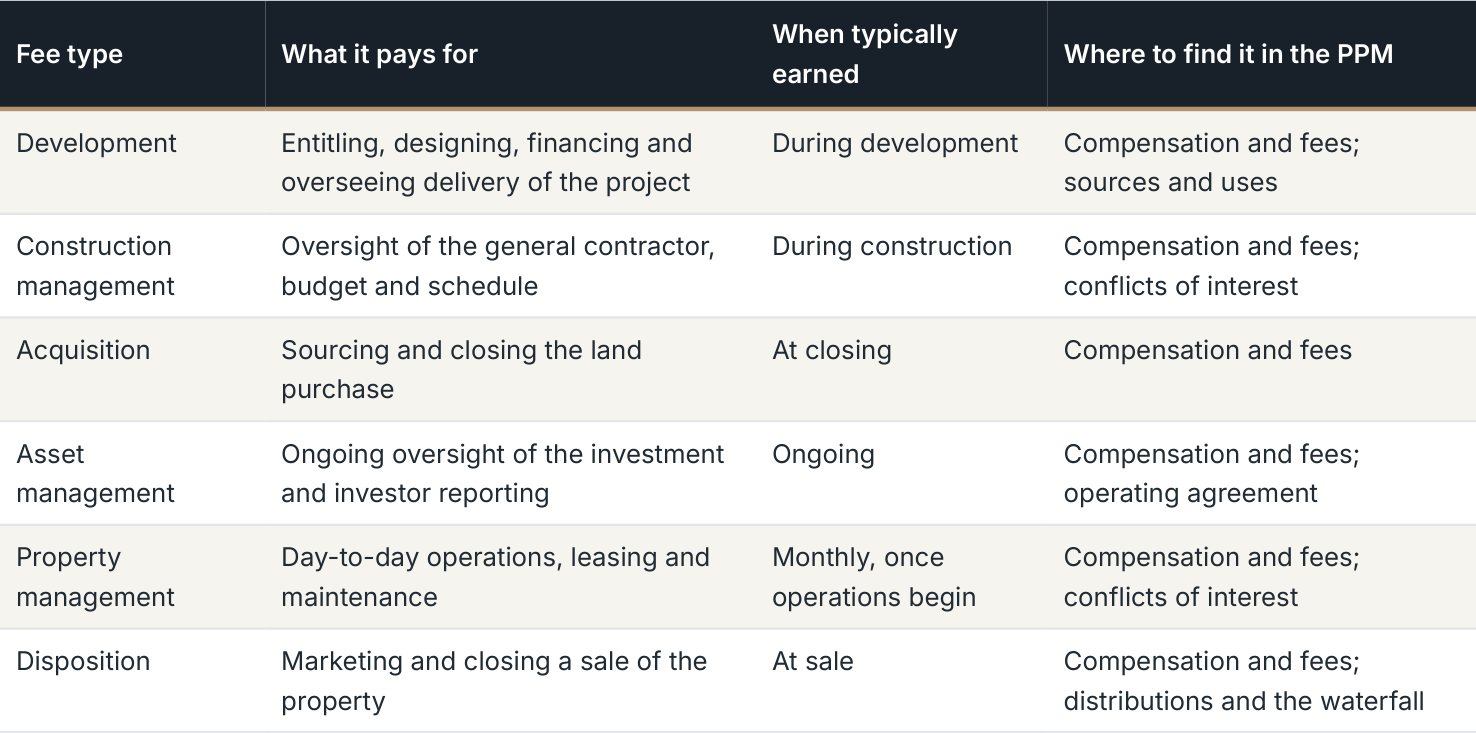
Table Summary and Key Values
| Fee type | What it pays for | When typically earned | Where to find it in the PPM |
|---|---|---|---|
| Development | Entitling, designing, financing and overseeing delivery of the project | During development | Compensation and fees; sources and uses |
| Construction management | Oversight of the general contractor, budget and schedule | During construction | Compensation and fees; conflicts of interest |
| Acquisition | Sourcing and closing the land purchase | At closing | Compensation and fees |
| Asset management | Ongoing oversight of the investment and investor reporting | Ongoing | Compensation and fees; operating agreement |
| Property management | Day-to-day operations, leasing and maintenance | Monthly, once operations begin | Compensation and fees; conflicts of interest |
| Disposition | Marketing and closing a sale of the property | At sale | Compensation and fees; distributions and the waterfall |
Fee names, amounts and timing vary by offering. The PPM and operating agreement control.
Conflicts of interest
Where the sponsor's interests could diverge from yours, for example when an affiliate serves as general contractor or property manager. A well-structured arrangement ties the affiliated builder's rewards to the project's own budget and schedule goals, and the PPM should explain how affiliate arrangements are priced and overseen.
Distributions and the waterfall
The order in which cash flows to investors and the sponsor, including any preferred return and the sponsor's share of profits. Cross-check this section against the operating agreement, which controls.
Capital calls and dilution
Whether you can be asked for more money and what happens if you do not contribute. A fully funded interest reserve and adequate contingency reduce the chance of a capital call, but the provisions matter regardless.
Risk factors
The longest section and one of the most important. It describes construction, market, financing, liquidity, regulatory and tax risks. Read it to understand what could go wrong, then ask the sponsor how each major risk is mitigated.
Tax considerations
A summary of how the investment is expected to be taxed, including K-1 reporting and depreciation. It is general; review it with your own CPA.
Transfer restrictions and liquidity
Private interests are illiquid. This section explains limits on selling or transferring your interest and the expected hold period.
Questions to bring to the sponsor after reading
1. Which risk factors do you consider most relevant to this project, and how are you addressing them?
2. How are affiliate fees determined and reviewed?
3. Under what circumstances could there be a capital call?
4. How does the operating agreement handle major decisions such as a sale or refinance?
5. When will I receive K-1s each year?
When to involve your advisors
An attorney can review the operating agreement and subscription documents. A CPA can explain how the investment fits your tax picture, especially if you plan to use retirement funds or expect to use depreciation.
Common terms you will encounter
Preferred return: a threshold return paid to investors before the sponsor shares in profits
Promote or carried interest: the sponsor's share of profits above certain thresholds
Capital call: a request for additional capital from investors
Major decisions: actions, such as a sale, that may require investor consent
Accredited investor: an investor who meets SEC income, net worth or credential tests
A 60-minute reading plan
If you have about an hour, this order gets you the most important information first:
1. Offering summary (5 minutes): confirm the amount, minimum, class of interest and timeline.
2. Business plan and sources and uses (15 minutes): understand what is being built and how the money is allocated, including reserves.
3. Fees and conflicts (10 minutes): list every fee and affiliate relationship.
4. Distributions and capital calls (10 minutes): sketch the waterfall and note any capital-call provisions.
5. Risk factors (15 minutes): skim headings, then read in full the risks specific to this project and market.
6. Transfer restrictions and tax summary (5 minutes): note the expected hold period and K-1 timing.
Keep a running list of questions as you read. Most experienced investors find that the questions matter more than the reading itself.
The bottom line
A PPM rewards targeted reading. Focus on the business plan, fees, conflicts, waterfall, capital calls and risk factors, and use what you find to have a sharper conversation with the sponsor.
A selection of Ascendant communities
Residences at Fannin Station, Houston, TX · mid-rise
Haven at Westgreen, Katy, TX · garden Haven at Main, Houston, TX · mid-rise
Join the How to Read a Private Placement Memorandum Investor List
To talk through development investing with the Ascendant team, visit https:// www.ascendantdevco.com/invest-with-us or call Ascendant Development at 713.600.9393.
Join the How to Read a Private Placement Memorandum Investor List
Sign up for How to Read a Private Placement Memorandum investor updates →
Scan the code to join the How to Read a Private Placement Memorandum Investor List.
S O U R C E S
1. Electronic Code of Federal Regulations, 17 CFR 230.506 (Regulation D exemption). https://www.ecfr.gov/current/title-17/section-230.506
2. Investor.gov (U.S. Securities and Exchange Commission), "Rule 506 of Regulation D" glossary entry. https://www.investor.gov/ introduction-investing/investing-basics/glossary/rule-506-regulation-d
I M P O R TA N T D I S C L O S U R E S
This article is for educational purposes only and is not an offer to sell or a solicitation of an offer to buy any security. Any offering by Ascendant Development or its affiliates is made only to verified accredited investors under Rule 506(c) of Regulation D through definitive offering documents, which should be read in full, including the risk factors. Real estate development involves risk, including the possible loss of principal, and is illiquid. Nothing here is tax, legal or investment advice; consult your own advisors. Forward-looking statements are not guarantees. Hypothetical examples are for illustration only and are not projections or the terms of any offering. Photographs show completed or existing Ascendant projects. They are shown to illustrate the firm's work and do not represent any specific current offering.
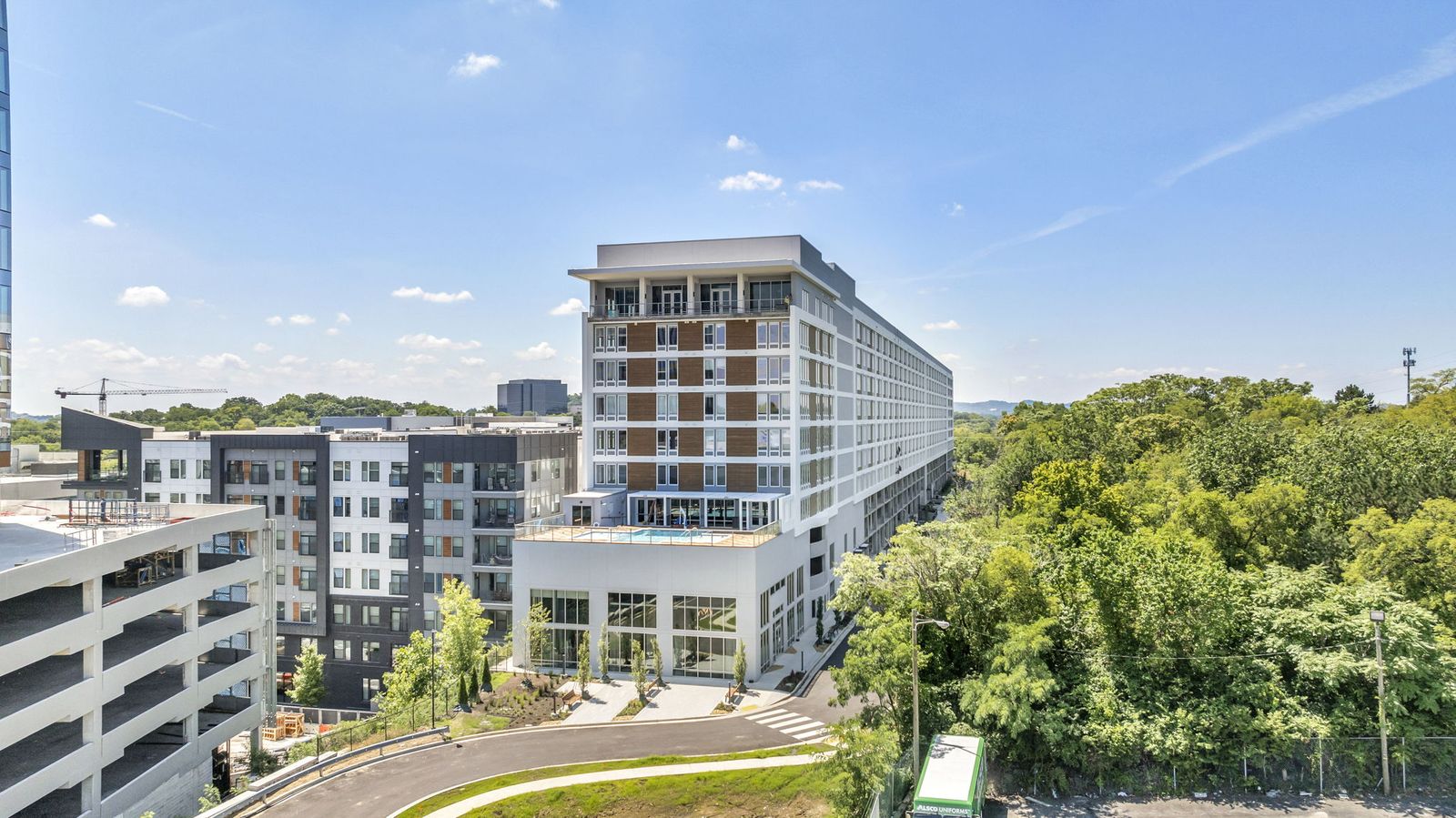

Haven at Charlotte, Nashville, Tennessee.
Haven at the Gulch, Nashville, Tennessee.
P P M R E V I E W C H E C K L I S T ( P R I N T A N D K E E P B E S I D E T H E P P M )
1. Offering summary (5 minutes)
Amount being raised and the minimum investment
Class of interests offered
Key dates and timeline match what you were told
2. Business plan and sources and uses (15 minutes)
What is being built, where and on what schedule
Total project cost and how the money is allocated
How the interest reserve and contingency are sized
3. Fees and conflicts (10 minutes)
Every fee to the sponsor and its affiliates is listed, with what it pays for and when it is earned
Every affiliate relationship, such as general contractor or property manager, and how it is priced and overseen
4. Distributions and capital calls (10 minutes)
Sketch of the waterfall, including any preferred return and the sponsor's share of profits
Capital-call provisions and what happens if an investor does not contribute
Waterfall terms cross-checked against the operating agreement
5. Risk factors (15 minutes)
Headings skimmed
Risks specific to this project and market read in full
Questions noted on how each major risk is addressed
6. Transfer restrictions and tax summary (5 minutes)
Expected hold period and limits on transfer
K-1 timing and tax items to review with your CPA
Before you call the sponsor
Running list of questions completed
Attorney and CPA review scheduled, if needed
For educational purposes only. Not an offer to sell or a solicitation of an offer to buy any security. Any offering will be made only to verified accredited investors under Rule 506(c) of Regulation D through definitive offering documents. Past performance does not guarantee future results.